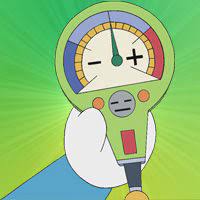
A scene from the 2070s. At that time it’s normal to travel in a time machine. Ruskin, a man who is from a middle class family is having a job in the 2080s. At one fine morning, while having his breakfast by mistake, juice spilled on the time machine. He did not get worried because the time machine is waterproof. He sat in the time machine and started traveling for 2080s. After a while Ruskin found that his time machine was damaged.
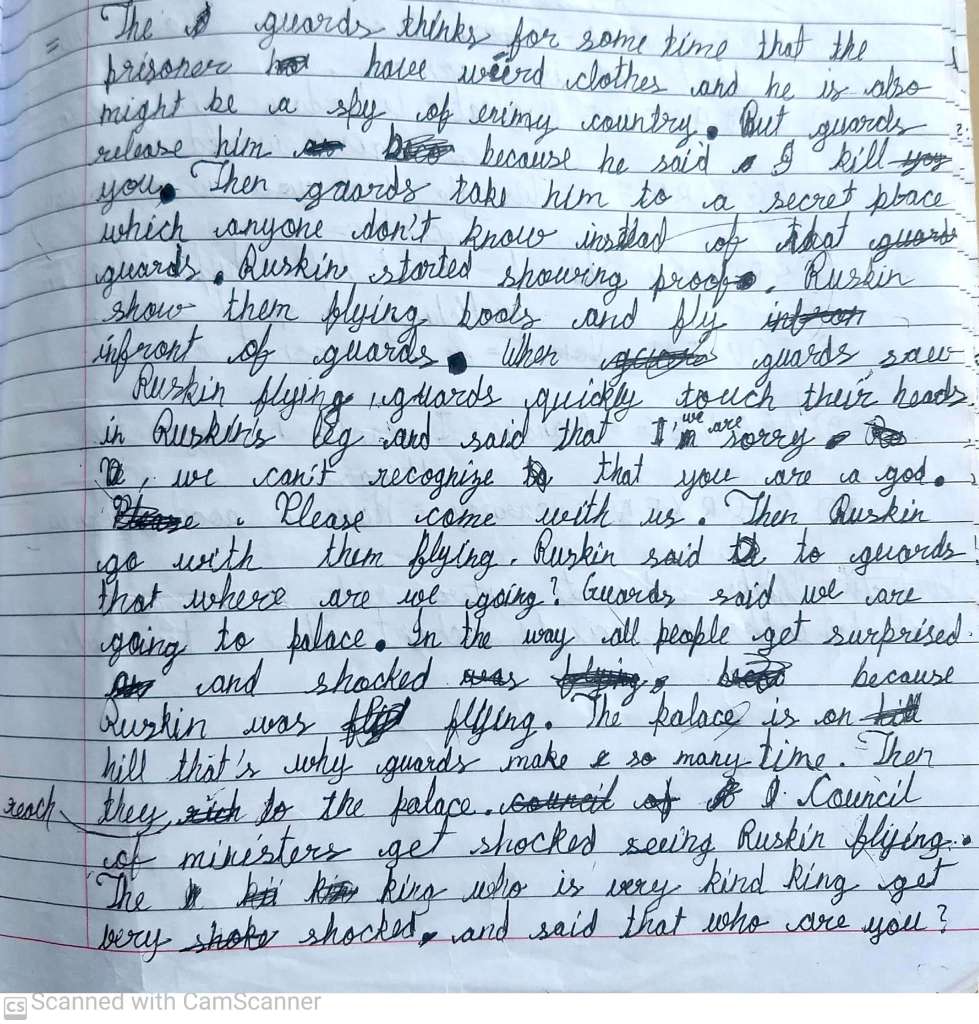
Some time later he got unconscious. When he got conscious he found himself in an empty field. Ruskin goes near his time machine and checks it. Unfortunately it got heavily damaged. Seeing this Ruskin gets so upset and gets unconscious again. The moment he opened his eyes he found himself in jail. Ruskin thought that he reached in the past. He tries to talk with prison guards but guards can’t understand. Then Ruskin take out his advanced translator and put in his ears and mouth. Ruskin tried again to speak with guards and this time they understood Ruskin’s language. Ruskin said that I am a man from the future. Guards said how ? Ruskin responded, I can show you all the proof, if I am allowed to go out. If not any way I’ll break jail and kill you all. The guards think for some time that the prisoner was wearing some weird clothes and he also might be a spy of an enemy country. But guards released him because he warned that he would kill them all. Then guards take him to a secret place which no one knows except that guards. Ruskin started showing proofs. Ruskin show them flying boots and fly in front of guards.

Ruskin’s Flying Boots
When guards saw Ruskin flying, guards quickly touched their heads on Ruskin’s leg and said we are sorry we can’t recognize that you are God. Please come with us. Then Ruskin go with them flying. Ruskin asked the guards, Where are we going ? The guards said we are going to the palace. In the way all people get surprised and shocked because Ruskin is flying. The palace is on a hill that’s why guards make so much time. Then they reach the palace.
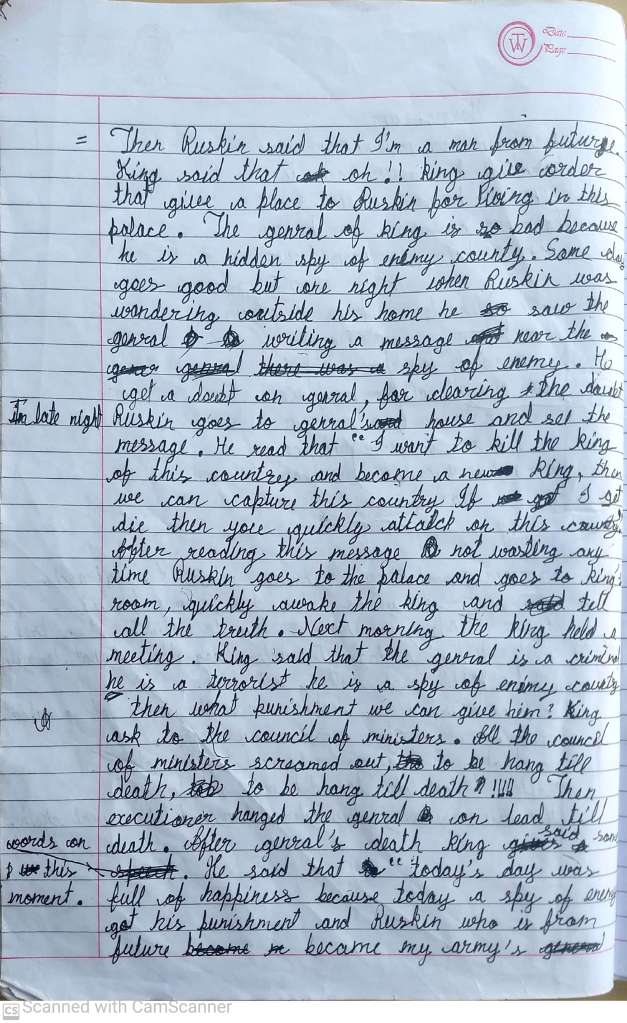
The council of ministers get shocked seeing Ruskin flying. The king, who is a very kind king, gets very shocked and asks, “Who are you ? Then Ruskin said that I am a man from the future. King said Oh !! King gave an order to give a place to Ruskin for living in the palace. The military general of the king is so bad because he is a spy of an enemy country. Some days went well but one night when Ruskin was wandering outside of his home he saw the military general writing a message. He gets a doubt on the military general, for clearing the doubt in late night Ruskin goes to the military general’s house and sees the message. He read that “ I want to kill the king of this country and become a new king, then we can capture this country. If I die then you will quickly attack this country”. After reading this message not wasting any time Ruskin goes to the palace and goes to the king’s room, quickly awakens the king and tells all the truth. Next morning the king held a meeting.
King said that the military general is a criminal, he is a traitor and he is a spy of an enemy country then which punishment can we give him ? King asked the council of ministers in anger. All the council of ministers screamed out, to be hanged till death, to be hanged till death !!! Then the executioner hangs the Military General till death.
council of ministers
Executioner hangs the Military General till death
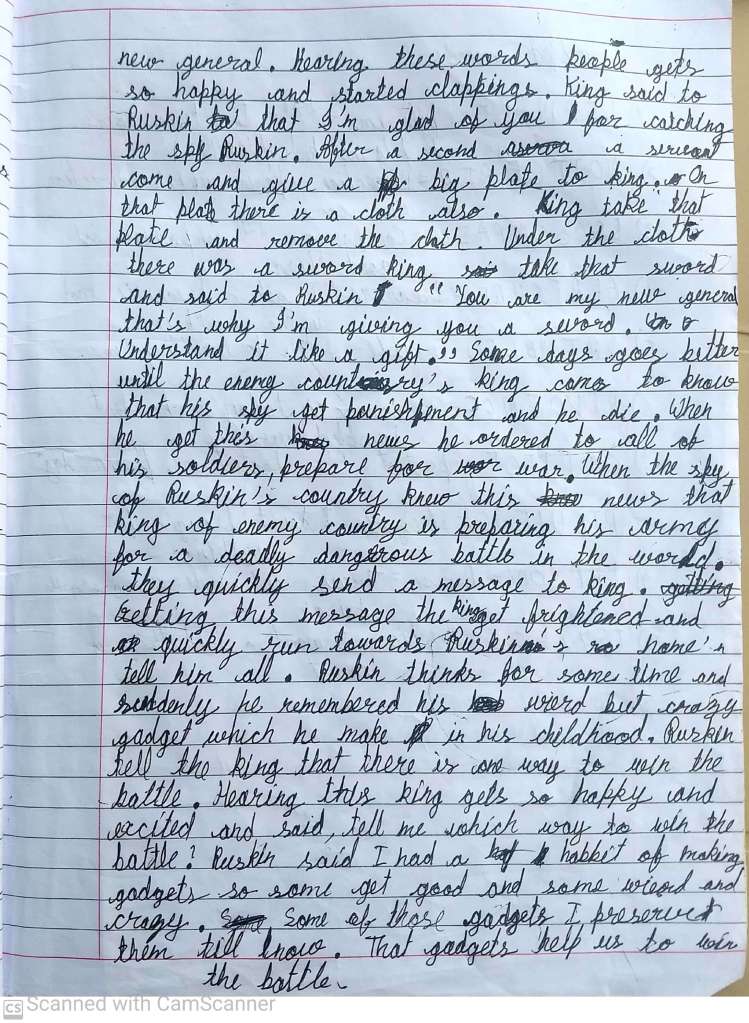
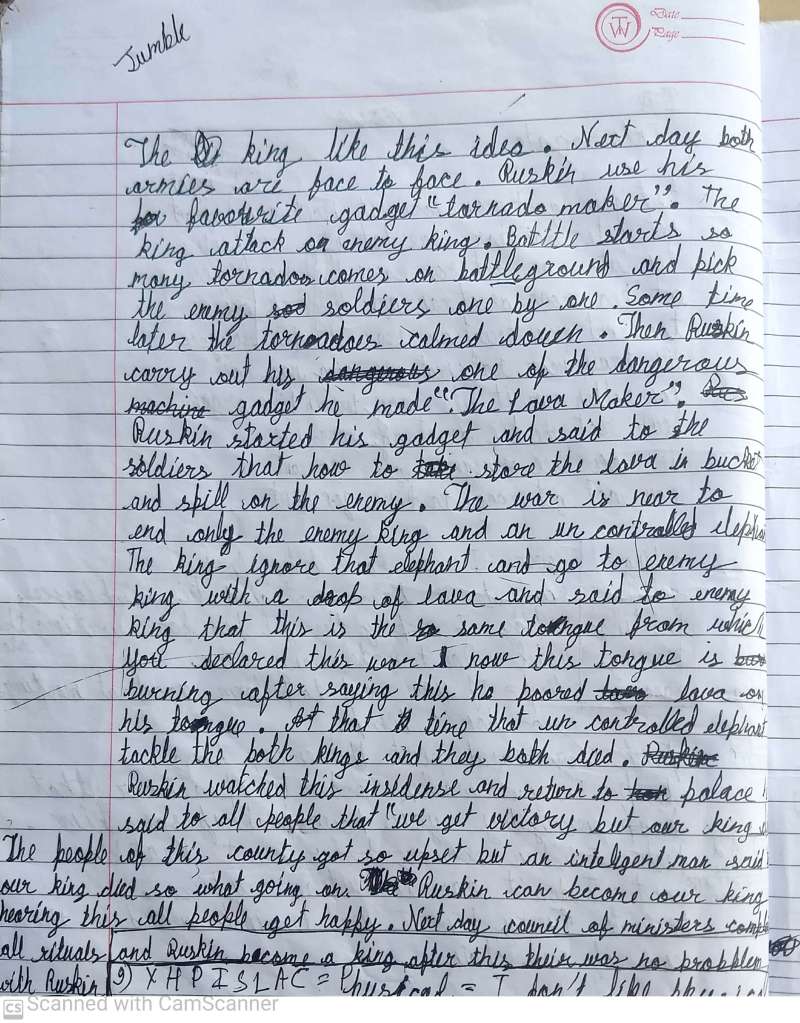
After the general’s death the king said some words on this moment. He said that today’s day was full of happiness because today a spy of an enemy got his punishment and Ruskin, who is from the future , became my army’s new general. Hearing these words people get so happy and start clapping. King said to Ruskin that I’m glad of you for catching the spy. After a second a servant comes and gives a big plate to the king. On that plate there was also a cloth. King takes that plate and removes the cloth. Under the cloth there was a sword, the king took that sword and said to Ruskin “ you are my army’s new general that’s why I am giving you a sword. Understand it like a gift ”. Some days go better until the enemy king comes to know that his spy got punished and died. When he got this news he ordered all of his soldiers to prepare for war. When the spy of Ruskin country comes to know this news that the king of an enemy country is preparing his army for a deadly and dangerous war in the world they quickly send a message to the king. Getting this message, the king gets frightened and quickly runs toward Ruskin’s home and tells him all. Ruskin thinks for some time and suddenly he remembered his weird but crazy gadgets which he made in his childhood. Ruskin tells the king that there is one way to win the battle. Hearing this, the king got so happy and excited. Tell me which way to win the battle ? Ruskin said I had a habit of making gadgets so some got good and some weird and crazy, some of those gadgets I preserved till now. Those gadgets help us to win the battle. The king liked this idea. Next day both armies were face to face. Ruskin uses his favorite gadget “The Tornado Maker”.
Tornado
Ruskin’sTornado Maker
The king attacked the enemy king. Battle starts, so many tornadoes come on the battleground and pick the enemy soldiers one by one and kill them. Some time later tornadoes calm down. Then Ruskin carried out one of the most dangerous gadgets ever made, “ The Lava Maker”.

Ruskin’s Lava Maker
Ruskin started his gadget and explained to the soldiers how to store lava in a bucket and spill on the enemy. The soldiers of the enemy country are dying like ants.
War between two kings
The war is near to end, only the enemy king and an uncontrolled elephant remain. The king ignore that elephant and go to enemy king with a drop of lava and said to enemy king that this is the same tongue from which you declared this war but now this tongue gets burn after saying this he poured lava on his tongue, at that time that uncontrolled elephant tackle the both kings and they both died.
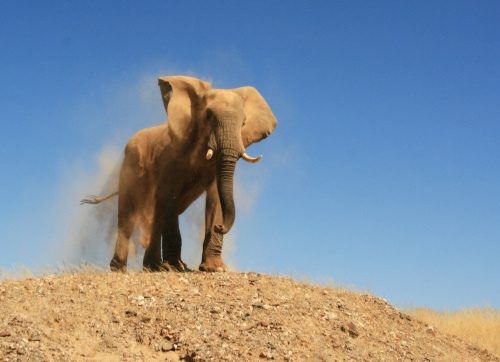
Uncontrolled elephant
Ruskin watched this incident and returned to the palace. He said to all people that “we got victory but our king died”. The people of this country got upset but an intelligent man said our king died. I know how you are feeling but don’t worry because there is one capable man who can become a good king. Good means more good than our old king. Everyone asks who ? The man pointed toward Ruskin, hearing that everyone came in their normal form and accepted Ruskin as their new king. Next day the council of ministers completed all rituals and Ruskin became a king.
Ruskin became a king
After this there was no problem with Ruskin and he fully forgot about his future world.
(21st June 2021. This story is made by using these words – King, Dream, Accident, Time Machine, Sword, Elephant, Victory, Tornado, Hill, Palace)
जब मैं छठी कक्षा में था, तब मैंने पहली बार अण्णाभाऊ साठे के बारे में पढ़ा और उनके जीवन पर एक भाषण लिखा। वह भाषण मैंने 31 जुलाई 2021 को अण्णाभाऊ साठे जयंती (1 अगस्त) के अवसर पर अपलोड भी किया था।
अण्णाभाऊ साठे, जिनका असली नाम तुकाराम भाऊराव साठे था। उनका जन्म अछूत माने जाने वाले मांग समुदाय में हुआ था। उनका पालन-पोषण और पहचान ही उनके लेखन और राजनीतिक सक्रियता का मुख्य आधार रही, जिससे उन्होंने समाज के वंचित वर्गों की आवाज़ बुलंद की। उनका जीवन दलितों, मजदूरों और वंचितों के संघर्षों से जुड़ा रहा और यही संघर्ष उनके साहित्य में गहराई से झलकता है।
उनकी प्रमुख रचनाओं में “फकीरा”, और अनेक लघुकथाएँ शामिल हैं। लोकशाहीर के रूप में उन्होंने तमाशा और लोकगीतों के माध्यम से समाज में जागरूकता फैलाने का कार्य किया।
18 जुलाई 1969 को उनका निधन हुआ, लेकिन उनका साहित्य आज भी समाज को प्रेरणा देता है।
नीचे अण्णाभाऊ साठे द्वारा लिखित प्रसिद्ध गीत/कविता “जग बदल घालुनी घाव … सांगून गेले मला भीमराव” प्रस्तुत है, जो डॉ. आंबेडकर की पुण्यतिथि पर श्रद्धांजली स्वरूप रची गई थी। ये शब्द उनके संघर्ष और समाज परिवर्तन के दृष्टिकोण को व्यक्त करते हैं:
जग बदल घालुनी घाव ।
सांगून गेले मला भीमराव ।।
गुलामगिरीच्या या चिखलात ।
रुतून बसला का ऐरावत ।।
अंग झाडूनि निघ बाहेरी ।
घे बिनीवरती धाव ।।
धनवंतांनी अखंड पिळले ।
धर्मांधांनी तसेच छळले ।।
मगराने जणू माणिक गिळीले ।
चोर जहाले साव ।।
ठरवून आम्हा हीन अवमानित ।
जन्मोजन्मी करुनी अंकित ।।
जिणे लादून वर अवमानित ।
निर्मुन हा भेदभाव ।।
एकजुटीच्या या रथावरती ।
आरूढ होऊनि चलबा पुढती ।।
नव महाराष्ट्रा निर्मुन जगती ।
करी प्रगट निज नाव ।।
इस गीत में गुलामी, असमानता और वंचितों के दर्द की अभिव्यक्ति है। यह कविता दलित संघर्ष और सामाजिक जागरूकता की प्रतीक है, जिसमें अण्णाभाऊ साठे के शब्दों का तीव्र प्रभाव दिखाई देता है
A Reflective Account Of The High School Achievers Program, June 2025
Abstract
This reflective narrative recounts my deeply transformative experience participating in the Young Leaders for Active Citizenship (YLAC) High School Achievers Program, held over eight days from June 8 to June 15, 2025, in Hauz Khas, New Delhi. The program introduced me to a range of topics that shape our society — including democracy, public policy, identity and privilege, social justice, disability inclusion, advocacy, economic systems, and leadership. Through a mix of group discussions, role plays, guest lectures, simulations, and field visits (including one to AADI – Action for Ability Development and Inclusion), the program gave me new ways to think about the world and my place in it.
The story begins with how I first learned about the program — a surprise Sunday visit from my father at my boarding school — and moves into my reflections on application, preparation, and participation. I detail engaging classroom activities, thought-provoking videos, games, and group interactions. I talk about challenges I faced — including falling ill on the second day — and how I still stayed engaged. Each day’s learnings are described vividly, with rich sensory details, humor, self-reflection, and emotional honesty.
By the end, I find myself transformed — from a student nervous about 7-hour days to someone confident in understanding complex social issues and passionate about making a difference. The conclusion reflects on both the intellectual gain and the emotional bonds formed during the program. This piece is not just a recollection of events but a heartfelt journey through the lens of a curious learner stepping into the world of active citizenship.
Introduction: How It All Began
Getting certificate of Participation in HSA of YLAC June 2025
I am writing about the High School Achievers program (HSA) of Young Leaders for Active Citizenship (YLAC) project and their 8 day programme (8th June 2025 to 15th June 2025), which includes democracy, public policies, identity and privileges, reservations and a lot of things related to political science. I had no dea about this program till my father came on a Sunday 2nd March 2025 without informing me, when I was studying in 9th class at PM SHRI JNV Jhajjar, Haryana. This is the boarding school where parents are allowed to meet their wards twice in a month on the 2nd and 4th Sunday. Hence I was quite surprised by my father’s presence. Upon enquiring he told me that today he has some urgent work. For coming there he had to take special permission from the principal. I had literally no idea about what was going on, why was he there, was there any kind of emergency or anything else. My mind was just bouncing up and down. I was so confused at that time, but somehow I got calm. First we had our lunch, I am not clearly remembering what we ate for lunch exactly. It doesn’t matter. My bed was not so big, had only one sleeping place for 1 student, so my father took a chair and sat on it. One special thing about my bed – It was slightly damaged and repaired, That was the reason I had the worst bed among my friends. It wasn’t any different than a shaking toy, but somehow we managed to sit on the bed with bags and a laptop on my lap. It was a very interesting scene, whenever any of us moved the whole bed used to shake. Then we had to stop the movement until it was silent. He showed me what was the matter, why was he there in the school that day.
Exploring the HSA Program
My father showed me about HSA and their programs YLAC, so basically I got the idea that this program is also a kind of class or session. Few minutes later, after reading everything regarding the HSA and YLAC, I found out that there is a test in which some basic questions will be asked and they will decide on the basis of the answers whether to take us in the program or not.
My father had already done most of the things except answering the questions. He had already typed some questions regarding my introduction, my likes and dislikes and my aim. I gave those questions a final touch up. I read further and found that, for the scholarship I had to write an essay explaining the problem and why I wanted the scholarship. Without wasting my time I started typing my experiences and my thoughts on the laptop. All my friends were chit chatting in the dormitory, my bed was making various types of sounds, my fan was also not working properly that day and was creating noise. It was a sunny day. At last we finished the work. The sun was setting towards the west. In the end my father told me that a recommendation letter is needed from the school. So we headed towards the teacher’s quarters. We went to my Marathi teacher, Mr. Vishal Agnihotri, he was the head of the migration department. He was an alumni of JNV Amraνati, Because of such reasons we believed that he would cooperate with us in this matter. We went to his quarter, which wasn’t so big, but was good. As we thought he read about HSA and YLAC and agreed about what we asked, without a second thought. But later he said that there would be some school formalities and office work which we need to do.
That day was totally exhausting for me, at night I was in a great slumber. After all the school formalities and office work. I finally registered everything. The registration needed the certificates also, the part of registration was important for me because it has a lot of memories connected to me. Then slowly the days passed. I gave my 9th final term examination and returned to Amravati. Took some days for rest at home and again went to school for the 10th session. Like that a month of 10th got finished with no time length. I was joyful because my holidays were starting. I came to Delhi on the 5th of May and again returned to Amravati on the 15th of May because of my Mama’s wedding. We came to Delhi again on 2nd of June. I was too curious and too tense for this session of 8 days. Because it was 7 hours everyday. I was scared of thinking how I would survive there for 7 long hours. I was feeling uneasy those days, but after everything I had to go for that programme.
Day One: First Steps and New Faces
Finally that day came when I was supposed to go the session of 7 long hours at Hauz khas I got up earlier than other days because I had to get ready accurately at 8:15 am, we were supposed to leave at 8:30 AM for reaching at 9:30 AM, As we hoped everything went perfectly with no sudden change. We booked a cab perfectly at 8:25. Three of us sat in the cab, I was carrying a bag with a pen, notebook, and water bottle within it. That day was Sunday which we know is a holiday, my father and mother both were free that day,that’s why they were able to come with me that day.
With a lot of courage, and a little bit of hesitation and fear, I was sitting in the car, watching the huge structure of Punjabi Bagh Metro Station, Rajouri Garden, highways, and parks — thinking about how the Indian School of Public Policy (ISPP), Hauz Khas, would be. Would it be as big as the British Council building, or something else entirely? I was wondering how I would perform, how I would make my day joyful. I wasn’t even talking to my parents.
Somehow that thoughtful hour ended and we reached ISPP Hauz Khas. The building was not so big, but was very attractive and environment friendly with a green garden just in front of the hall and connected to it. The time we went inside, my hesitation was miles away from me and my courage was just on my side. I stepped in the room, it was cold enough to make me cold and actually I caught a cold, but I’ll explain this story later. I was told to sign before my name and to write it on a sticker, then to stick it on my chest. I was not nervous at all, but was confused.I was confused about whether I have to take a whole page of stickers or only 1, I asked for surety, they confirmed to take only one. I peel the sticker out and stick it on my chest. There were only 4 boys Inside, others were girls. The class was looking empty but after a while, It was full of students. At 10, the YLAC faculty started with their names Shubhra, Shohini. The hall was too big to speak without mike so, they were using mike for better audibility.
They started from giving sheets to everyone, those papers were about the student names and their facts, but the problem was, the facts and names both were shuffled. They gave us a task to align it in the proper order by asking everybody about their facts. Basically we had to place the number after the fact. In the next 5 minutes I was not able to hear any kind of proper statements because of the continuous noise. I had found only 10 out of 43. Most of the people were at 15. I was confused how they managed to interact with a number of people.
After this activity, we were asked to form two concentric circles and to move both the circles in opposite directions. Everybody should have a Buddy in front of him. The task was to talk with each other continuously for half a minute, then they’ll ring the bell and the circles had to move.The cycle continued for 5 minutes, that’s why I could hardly meet 5 to 10 people in the room.
This program was for 7 hours a day. At first I was nervous about how I would spend 7 hours a day here. But how the first hour of the day went unnoticed, I don’t know.
They asked us to sit properly. They gave us some sticky notes to write down rules and regulations for ourselves. They asked us to stick those sticky notes on a tree. In the end the tree got hidden behind those sticky notes. We were not able to see that tree.
Sticky notes of rules and regulations, values and outcomes of programs written by us
The first day was based on Identity and privilege. We did several activities on the topic. We learnt what an identity is, what our given, chosen and core identities are. Given is called to an identity which is not in our control, for example gender, caste, race, religion, etc.
Chosen is called to an identity which is in our control, for example, some abilities, hobbies etc. Core, is called to an identity which is the main part of our identity, for example, patriotism, helping nature. Basically these three are the components of identity
We were asked to write down our given chosen and core identities on page. It took 5-10 minutes to think about my core identity. I wrote my given identity as male, Indian, Maharashtrian. In my chosen identity I wrote that I am a basketball player. I was confused about the core identity but I wrote that helping nature is in my core identity. This was individual work. After that we were asked to form a group of 7 and to share our point of views and our given, chosen and core identities. It was fun to have this kind of group activity which helped me to see inside myself.
After finishing the activity they asked us to align in lines for the next activity, they turned on the board and showed us the instructions and the question. The question was – what are the two biggest issues in India, which you can solve, if you had the power to solve it. The question was so simple. I simply thought of the ground level education system in India and poverty. Then we were told to form pairs. I did as they said. We were asked to discuss the problems and to reach two issues as the conclusion. Then we discussed and reached a consensus, consisting of poor implementation of the Education system in India and bad irrigation system. Then the group turned from 2 to 4 and so on. Like this, every time we had a minor or major difference in our consensus. Then 4 turned to 8, 8 turned to 16, 16 turned to 20, and finally 20 turned to 42. In the end we reached a consensus consisting of over consumption of resources and poor implementation of laws related to Education or Health.
Everyday they provided 2 time breaks and a meal to us. In breaks Sandwiches, Juice and lemonade were served. I enjoyed those breaks very much. In meals, they gave us paneer and chicken and provided Gulab Jamun at the end. In the second break, samosa and juice were given. After a great meal, we were supposed to play a game with blindfolds.
I had no idea what game we were going to play at that time. First we were divided into two groups. I was in the first group. They took us to the garden which was attached to the hall. We were asked to form a line along the hall. Then they gave us blind folds. We had to make ourselves blind. They instructed us to move as per the instructions given. Sohini sked us to move one step forward and one step backward to get an idea of the steps that we were taking. Then she told the statements loudly. There were different types of statements such as, if any of your parents has a degree from any esteemed universities?, any of your family members have a severe disease? Can your parents do anything for you ?Are you ever bullied by your race, caste, health, or personality? These questions enable us to find out how privileged we are. I think that I am privileged because my father has a degree from an esteemed university, my parents can do anything for me and I have never been bullied by my caste or personality. After that game we took our blindfolds from our heads and found ourselves how differently we were positioned. I was in the middle. After that, the second group was invited for the same activity. We sat in the hall till they came. Meanwhile they gave us information about the field visit at AADI (Action for Ability Development and Inclusion, Hauz khas. Then Shubhra passed an attendance sheet among us to write whether we are veg or non veg. The second group came after completing the activity. A video was shown to us after the game, which was based on privilege. We found that the same game was played there. It is available on Youtube. Then we discussed the privilege. Some time later they showed a story on the board. We read the story. It was based on privilege. Few days before, that story was sent to us by email by YLAC to have a look at it. I had read that story before coming to the session. The story was about Richard, a rich child whose parents can do anything for him, and Paula, a poor child whose parents can do anything for her. Richard got education from a standard school and Paula got education from a school where teachers were not interested in teaching. They got educated, Richard got a job from his father’s contacts and relations in his father’s own sector. But Paula has to work in a restaurant as a waiter. A lot of minor differences made a major difference. This was the message from the story. We discussed the story, how Richard got successful and Paula remained at her own place. Then we were introduced to social and cultural capital. Till that time I only knew human capital, but two more types of capitals had been added to my dictionary. Social capital is the capital we gain through our contacts and relationships in the society. Cultural capital means the cultural advantages we have. We related this to the story shown to us and found that in Richard’s case his father used his social capital to get a job for his son. At the end of the day we were given some QR codes to fill out the experience of the day. I filled it and came out of the hall. I called my parents to book an auto for me. I had some chocolates in my pockets. We had a never ending supply of melodies and pulses. Very quickly I got the auto, seat in it and reached home in no time, that no time means 1 hour. My whole day was good, it went very peacefully in the AC hall. I think that the AC was set for a very low temperature. That’s why it caught me cold. I was just sneezing at home, and at night my temperature was higher than normal. The next morning, it was very hard to go anywhere. I thought that I couldn’t go anywhere. I told my parents, and they took me to the hospital. Medicines were given to me, my father also had fever in that time period. So he had to take rest for that day. After coming home I told my parents about the first day of the programme. At the end of that day, debate was held on the reservations. The same happened, the group was divided into two, one was fighting for reservations and other was fighting against reservations. We discussed equity and equality, but finally there was no result of the debate.
Day Two: The Missed Session
The second day was about equality and justice. Since I was not feeling well, I have to skip the session, with a hard heart. My father and I had planned to watch the movie at night but we couldn’t. I don’t know why we couldn’t watch the movie, but I know one thing, that I slept very well that night.
I slept the whole day, I was feeling better after consuming prescribed medicine and sleeping for the whole day. That day was going very slow for me. But I don’t care about that. Instead of regretting it, I watched movies. At night YLAC sent us some videos on our gmail. Here is the list of videos –
1. Women’s Suffrage Movement Gaining Equality for Women
2. Manual Scavengers: The Dirty Picture
3. Inequality Is Out of Control
Those videos were based on manual scavenging, women suffrage and one was a movie named Selma. I watched those videos in the evening.
Day Three: Field Visit to AADI
The next day, I was feeling quite well. I had to go to a different place, at AADI (Action for Ability Development and Inclusion). It was at Hauz khas. My father booked an auto for me to AADI Hauz khas.
I got ready, took my backpack and went down and sat in the auto. I wasn’t feeling totally all right. That was the reason I kept my phone silent. I was just seeing the world outside. The buildings, the metro stations, the big monuments and structures of Delhi. When I reached Hauz khas, the driver was not able to find the AADI headquarters. I had to ask someone for the address, so somehow I reached AADI before time. When I reached it was 9:45, I entered the AADI’s campus. The campus was too huge. When I stepped in the reception I felt very good because of the air conditioner. First I went to the washroom, called my parents to inform them that I had arrived at AADI. My parents scolded me for turning the phone on silent. Some time later, Sohini and Shubhra took us to the hall, it was quite circular and had windows almost on the curved parts. Its ceiling was quite fascinating to me. It was looking like a wheel, the beams were the spokes of that wheel. I will salute the engineer who made it. The chairs were set along the curved part of the masterpiece. I noticed that there was no symmetry at all, the fans were located anywhere, the door was not symmetrical, the room had two sides of a square and the other was curved. I really liked the room. We sat there with a smile on our face and an open mind. Two members of AADI who were working with ADDI for years. They introduced themselves and then we introduced ourselves. It almost took more than 30 minutes.
After the introduction, they gave us some cards. They instructed us to read those statements written on the cards. Classify them into myth and fact. Those cards contained one statement each about disabilities and mental diseases. We were asked to find whether the statement is a myth or fact. Each student was carrying one card and she/he had to tell her/his opinion about the statement. My card was stating that – A person using a wheelchair can’t drive cars. I said that it is a fact, considering the person has to use his legs to put pressure on brakes, accelerator and clutch, but, because the person is using a wheelchair, can’t. But that was wrong, the statement was a myth, because of technological advancement. Some special cars were made for them, they can drive, not using their legs but their hands.
After this card session, Shubhra and Sohini divided us into two groups for better guidance and to save time. Actually we were going for a field visit. The first group was heading towards the computer and printing section and the second was heading to the place where accessible things were kept. I was in the second. We were taken to the ground floor. A lot of things were present there, which makes the people with disabilities’s life easier, such as the accessible toilets, toys for small kids, which can enhance their understanding. Mouses for those who can’t use normal ones. It is a ball fixed in a rectangle box. Accessible kitchen. A lot of things were there, a lady was explaining all of the things and their uses. Then we moved to the computer and printing section. The computer section wasn’t too big but was very useful for the people with disabilities. They were given some courses which they can complete throughout the year. But there were no such time limits for them, they could take as much as they wanted. There were some accessible chairs present.That’s why there were no barriers for people with disabilities. The printing section was just at its side. We went there in no time. Actually it was not like a printing press where printing of paper is done, the stamping work took place in that room. It was a square room having posters stuck on the walls, the posters were full of stamps of various shapes and sizes. A lady and man were working there, and that man had some kind of disability because of which he was not able to speak normally. But we understood everything he said. The lady seemed to be the head of that department. There was a chart, she told us that, the chart here contains the colour and some statements before them. These colours were showing us how a stamp is big. For bigger or smaller stamps a specific colour was given. The colours were present at the backend of the stamp. Some of the stamps were too big, some were very tiny. They had made some arrangements for us, they placed chart papers on the table and set up a structure with holes in it. It gives us an idea of where to stamp. They allowed us to stamp whatever we wanted.
Some type of colour was there in a bowl. I don’t know the clear name of that colour. Those colours were not harmful for us, but for clothes. That’s why we were instructed to keep our clothes away from those colours. A variety of stamps were present there. Stamp of flowers, animals, cup of tea, designs, structures etc. We were able to color the sheet using the stamp in various colours – for example, one half of the flower was red and the other half blue. For stamping, we had to colour some part of the sponge by brush and then to press stamp there and then on paper, we could do it with two or three colours also.
I stamped various types of shapes and animals. At last-someone requested for a stamp of chai (tea). That lady quickly took out that stamp from the crowded drawers of that room and gave it to him. We were fascinated with that cup of chai. Everybody tried that cup of chai.
Later we reached back to the masterpiece hall. Before visiting the computer section and stamp section, some videos were shown to us. One of them was about a girl, who was totally mute, she was not able to speak. She was very curious to explore the new things in the world. She eagerly wanted to be an independent person, her goal was – No one should treat her as a liability. Once she went to the market without permission of her family members, she found that zomato was hiring people like her. She went there and found a girl doing actions to let the others understand. She was very happy to see one like her doing her job happily and independently. She asked there for a job and somehow she got the job. She came back home, her family members were very happy to see that she is now independent. I think that the name of that video is “Kshamata” (capacity). Another video was about a boy who was using crutches. He could not walk properly without using the support of sticks. He was now a manager at an office. He was living his life happily, He had married a year or two ago. The person in that video actually came to that place to interact with us. It was a great experience to talk to the person shown in the video just before some time. First he told us about himself, his profession, his early life, pressure of family, exam preparation etc. He had a very frank personality. He said that he was the eldest of his siblings, so he had to take the responsibilities earlier. He taught his siblings for their better education.
Then another person came, he was sitting in a wheelchair. He has a medical problem in which the muscle growth of the body could not take place properly. But instead of being a liability he was a founder of an NGO, working for social good, he also interacted with us.
At the end of the third day, Pizzas were given to us. I started eating the Pizza right there and it was half finished, my father booked a cab for me. I went outside, it was too hot there, I found the cab in a short time, I sat in the cab and started eating the remaining half Pizza. It tasted too good, because I was hungry. I think that hunger can make anything tasty. I reached home around 2:30 pm. I ate my lunch and I slept. I told my parents everything that I had seen.
Day Four: Democracy, Constitution, and Government
Next day I had to wake up earlier for the class. When I got ready, my father booked a cab. That day he also came to ISPP Hauz khas with me because his work place was near ISPP. It was 10:05 when I reached. I knew I was late but I didn’t miss much. When I reached there, they were forming groups, 6 groups were created there. I was in the fourth group. An article was given to each group. The instructions were given to us to read the article, discuss the article and to present the article to others with two members of the group. We were 7 in a group. 15 minutes were given to us for reading, understanding, discussing and for presenting. Our article was about ‘Lee Kuan Yew’s – Challenge to Democracy’. There was a contrast between the USA and Singapore in it. They were compared in all aspects, whether it is GDP or governance. The US is seen as struggling in corruption but Singapore in contrast, has become a model of good governance, under the reign of Lee Kuan Yew. There was a statement in the article that states “Only 8% of Singaporeans think that their government is corrupt, versus 85% of Americans. The article states that Singapore is less democratic but more successful than the countries that are democratic. That is why it is named as a Challenge to Democracy. Two of us were ready to go there to present our article.
However, after some time group 1 started presenting. Their article was about ‘The Philosophical perspectives’. In the article, two philosophers were stated, one was Thomas Hobbes and other was John Locke, Hobbes described about the state of nature which was present before government existed. In this state, everyone was free. Anybody can do anything. No rule, no law existed. Think how dangerous it would be. If we liked somebody’s property, kill him and take it. This was the situation of the state of nature. To control this, people gave up their freedom to someone powerful and who could rule to keep peace, Locke states that the government and power belongs to the people.
In the second article, which was named as ‘Balancing Liberty and Order’. In that article, it is stated that if the state of nature were present, how horrible the world would be. To keep it peaceful the people gave some of their rights to the government. That is why governments are created. For example, drug laws are created. Any drug addict can say that the government has taken away his right to consume drugs but actually it is to protect life. So much Liberty could harm the harmony in the country. Like in the title the government is made for balancing law and order.
The third one is “Why the Magna Carta still matters today“. Firstly when I heard the explanation of the article, I barely understood it. I was thinking that the Magna Carta is a woman who has signed any kind of document, but it is not like that. Magna Carta itself is a document that defines the rights of king John of England, a group of wealthy men called barons and catholic church in England. King John was an unfair ruler. He consistently lost wars against France, raised taxes without consulting anyone, and appointed an archbishop without the Church’s permission. It resulted in the making of an army by barons and Churches. Churches and barons raised voices to force the king to sign the Magna Carta. In Latin, it means the Great Charter. The document states that the king would have to ask barons before raising tax. A council of 25 barons would be established there to advise the king. The king can’t punish anybody without fair trials. It still matters because the US constitution is inspired by it and is called the foundation of modern Democracy and human rights.
The fourth one was ours i.e. Lee Kuan Yew’s Challenge to Democracy. About which I already explained above. The name of the fifth article was ‘Despite its Limitations, Democracy beats other types of government‘ Like Its name it states the same. It includes Churchill’s statement,
Democracy isn’t flawless but it is better than the other forms of government
It includes the study of Adam Przeworski, which states that
in democracies, life is better than any other form of government. It says that people in democracies live 5 years longer. Infant mortality is lower in democracies. Democracies spend more money on health and safety than dictatorships
In short it provides a better standard of living. Democracies are better than any other form of government because it is accountable, it respects the rights of the citizens, it provides public participation in the election of leaders. For these reasons democracy is a better form of government. I think that it is actually a better form of government because it provides public participation in making laws and electing our leaders, which is not provided in any other form of government except Democracy. Actually, I read these articles after I got back home. In the hall, I understood only a small part of everything that was said. Reading at home helped me better understand these articles.
This activity took more than an hour. The topic of that day was Democracy, Constitution and the Government. That day was full of theory. A lot of videos were shown to us about our government and constitution. We were told about the working of the government according to the constitution. What is the government ?What are the organs of the government ? What are the roles of those organs ? Which people come under those organs ? We discussed such topics. Organs of government are Legislature, Executive and Judiciary. Their roles are given below.
Legislature – Making of laws
Executive – Implementation of laws
Judiciary – Check whether the law is getting implemented or not and resolving disputes between two people, two states or two firms etc.
We watched the videos in which our nation’s lawmakers were brutally fighting with each other, not only our nation, we had seen the lawmakers of different countries fighting. I really enjoyed that clip, seeing them fighting I was quite surprised and became doubtful about the country’s lawmakers. We discussed the question: Are conflicts beneficial for the government?
We observed how the government functions in Parliament and what happens there throughout the day. A guest speaker came there. His name was Mr. Himanshu Burad. He came there to share his experience, his work, and to resolve our doubts. As much as I heard, he is from a village of Rajasthan, got a degree in Engineering and is working in the Union Health Ministry. He is a Public Policy graduate from Indian School of Public Policy. Now he is working on PM-ABHIM, digitalisation of medical treatment. It was good to listen to the first hand experience of a Public policy graduate about how government functions and how the policy is implemented.
At the end of the day, they informed us not to come the following day. The following day was a holiday. I came home by cab. I just slept in the car. At home I did my everyday work, ate dinner and slept.
Midweek Reflection Day
The next day was a holiday. We were asked to watch the 9th part of Samvidhan on Youtube; the link was provided on gmail. Samvidhaan’s federalism episode. But I didn’t watch it. I was supposed to watch Selma but could not. That day passed quickly.
Day Six: Tools of Advocacy
Today was a Friday, as always, I got ready and sat in the cab, my father was with me and I reached the destination. The topic of Friday was “Tools of Advocacy” . That day we were not sitting in that hall. I went ahead and found another hall. It had desks accommodated with mike. It was larger than the hall before. That day I was as late as the day before. They were discussing CSOs and NGOs. CSO(civil society organisations) and NGO (Non-Governmental Organisation) helps in policy implementations at the grass root level where the government itself can’t reach. It helps in the policy implementation in the rural areas, then we discussed Advocacy.
A lot of responses were coming about advocacy. Representing people’s voice, collective public support, organised voice. One of us gave an example of NAZ(NGO), which is working for those who were excluded from their communities and against the oppressive mentality against the homosexuality.
We discussed about the advocacy movements that are heard several times such as “the me too movement”, it was a social movement and awareness campaign against sexual abuse and harassment. “Narmada Bachao Andolan”, held for saving Narmada river. “The chipko movement”, held for protecting trees, was an environmental campaign held in the 1970s for protecting trees. French and Russian revolution, as we all know these are the revolutions against the great monarch demanding democracy and basic human rights. “Green revolution”, an agricultural movement when the use of fertilisers was at its extremities, happened in the mid 1960s.
The Advocacy and social change programs need a few things step by step. Such as 1) Articulating a clear goal, 2) Strategy, 3) Messaging by stories, 4) Action either online or offline, 5) Measuring success means when you call your campaign a success.
Later, we were shown a video set in a hill station surrounded by lush green forests—Malgudi. I later discovered that Malgudi is actually an imaginary place. The video highlighted how a thermometer factory named ‘Care’ was dumping harmful chemical waste into the forests of Malgudi. This toxic waste affected many of the town’s residents, including the factory’s own employees. It was polluting Malgudi’s once clean and pure environment and causing severe respiratory illnesses among its citizens. Several protests happened for the closing of the company.
After watching the video we were told to divide ourselves in two groups. I was in the first group. The first group means we were told that we are the Malgudi Public Interest and had filed a case against the Care corporation. There will be a press conference, where the views of both sides will be heard. We were taken to a different room which was in the basement of that hall. It was almost sound proof. We discussed how we were going to fight the case. We were demanding for the closure of the Care corporation setup in Malgudi, we were accusing them for damaging the environment, pouring waste in the forest area, disturbing the tourism sector which was the only source of Malgudi residents, damaging healths and risking the lives of Malgudi residents. We made a chart and wrote our slogan “Care doesn’t Care”. We made several drawings on that chart. I made a thermometer that looked like a gun shooting a tree. It has a very deep meaning, I think. We took an example of Union Carbide in the Bhopal Gas Tragedy. They gave us 25 minutes to discuss, to make charts, to form slogans and to prepare for the press conference.
We got inside the hall, shouting Care doesn’t Care!! Care doesn’t Care!!. It was very fascinating to me. It was giving the feel of a real press conference. Our group members were shouting the allegations and demands with all effort. The next turn was theirs. They came on the stage shouting, Care does Care!!, Care does Care!!. They stated that they are a pharmaceutical company, who makes thermometers for the hospitals. They had sent their chemical waste to the US for purification. They are giving 3000 crores for public Medical support. They are compensating and supporting the family members of those employees who were dead because of their pharmaceutical chemical rich waste. But our judges didn’t give any final verdict. I liked that activity very much.
We all got seated. I think Sohini played a video. Viral Rap Video Wins Big Against Corporation Basically it was a rap for spreading awareness among the people about the condition of Kodai kanal hill station done by Unilever (world’s largest consumer goods company). It has the same story as Malgudi and Care corporation. It is a great rap, I played it several times even after coming home.
Various Advocacy Campaigns
A guest speaker came, her name was Kirrat. She was working in Youth ki Awaaz (YKA). It is a site where people from different caste, gender, religion, age group come and share their stories that matter. She showed us some videos which belonged to the site YKA.
One such video was of a man, Pranay Manocha, whose father was living in Libya in 2011. On 17th February, the riots were happening there, a lot of Indians were stuck and unsafe. He posted a story about that. A lot of people supported him because he wasn’t the only one who’s relative had been stuck in Libya. He got the whole support of those people. It created a heavy pressure on the External Affairs ministry. Because of his actions, 16000 Indians were rescued from Libya.
After playing this video she asked us – what makes a story powerful? There are four points for the powerful stories. Those are – 1) Emotional connect, 2) Urgency, 3) Relatability, 4) Personal Stake.
Later she showed us a video of Dr. Ashwani. The story in the video wasn’t related to Dr. Ashwani. It is a story of a village Rajghat in Dholpur district, Rajasthan. It was not a village, that place was treated as the other urban areas but the resources they had were scarcer than the village. It was located near the Chambal River. We know that the Chambal is famous for dacoits. That’s why corpses were often seen by the locals while they were using the river’s water. They used to push the corpses aside using bamboo sticks. But the worst part of the story was that the villagers not only used that water for bathing and other household chores, but also for drinking. They don’t even have a drinkable water facility. Since 1996 no marriages have been held until 2018. It is unbelievable that no marriage has been held for 22 long years. I researched about that place after coming home and found that the Chambal river was polluted but also dangerous because crocodiles used to live there. In 2013, Dr. Ashwani started the ‘Save Rajghat campaign’. He used social media, filed a court petition and drew attention to the village’s hardship. This drew the attention of the Rajasthan Government and the village got funds for water purifier, electricity supplies, and water pipeline. A Norwegian NGO later funded the village Rajghat. This was a very good example of advocacy in general life.
Later, she discussed the structure of power. She showed us a triangle which was divided horizontally into three parts. The lowermost part of the triangle is the people of remote and rural areas, who were less privileged. The middle part was representing the privileged people and the uppermost part was showing the people like businessmen, politicians, government employees, bureaucrats, media and actors.
Later, she showed us another video about Nikita Azad. Nikita Azad launched ‘Happy to Bleed‘ campaign in 2019 to challenge the menstruation taboos and the religious practices that don’t allow women at a particular time period to enter the temple. When I searched about her I found that she was a PhD candidate at the university of Oxford. The campaign started because of the taboos that restricted women from entering religious places, like temples, during their periods. This was also an example of an advocacy movement. It is necessary to make personal narrative as public narrative for gaining public support.
Later, she shared a story of Jolly, who was a wheelchair user. At Jolly’s working place there were no accessible toilets for wheelchair users. That is why Jolly was using adult diapers. It shows that there are some places, where still no accessible toilets are present even in workplaces. We had some questions and answers with Kirrat and thereafter she left.
Then Shubhra started the topic RTI (Right to Information). Basically it is a basic right given to the people by the government. It is a law passed in 2005 that allows citizens to request information from public authorities (like government departments, ministries, public offices). It shows the transparency and accountability in the working of the government. Then we discussed what we have to do to file an RTI. She asked us, had any of you filed an RTI? I think one of us whose name is Chaitanya has filed an RTI. I was totally not aware of RTI. That is why I had no idea about it. What is it? What does it make us accountable for? or How does it help us? I was only listening. He said that 10 rupees is the nominal fee, it is mandatory to pay everyone trying to file an RTI. We can get the information within 30 days after filing the RTI.
Then she showed us the video of some activists like Shubhas Chandra Aggarwal, Nikhil Dey in Rajasthan. He is involved in the “National Campaign for people’s right to Information”. Aruna Roy. She is a very old lady, but still working at the grass root level for development.
A sheet was given to all of us after showing the video of these whistleblowers. It was a speech by James Croft. At my home I researched about him and found that undergraduate at Cambridge, doctorate student at Harvard. His famous”6.12 seconds” (2010) speech was given to us for reading. Basically we heard it in the form of audio and the sheets were given to us for no confusion while listening. Now he is in Advocacy and Public speaking on Humanism and LGBTQ Rights. In his”6.12 speech” He told us about himself, then making it public and then jumping on to the current situation. Basically, he had divided the speech in three parts – story of self, story of us and story of now. In the first part, he starts from a general case of Tyler Celementy, who comited suicide because some of his roommates leaked the video of his romance with another person. It was live every second on the internet. Then he told about himself that he was teased for being a gay in his early school. He was a ballet dancer, but most of his friends didn’t like to see him dance, even teachers used to make fun of him. At his 7, his Physical education teacher was the first called him a fag. In the next part, he told us the story of us. He started from his experience. He said that not everyone has experienced something like that but we all know how it feels when nobody is on our side. We feel alone. He took some cases and said that imagine if you can, how it feels when coming home, seeing something strange in the backyard tree. something hanging on it. When you went closer and found that, who was it? It was Lucas who had hung himself at his grandmother’s home, it was Seth Walsh, 13, who had hung himself on a backyard tree. He ended with messaging, it could be your brother, sister, your son or daughter, it could have been one of us. In the last part he said that he is a high school teacher and not discriminating like his physical education teacher, instead he had been a positive role model for the gay students. This is the last line of his speech – We can’t let these things happen, we need to act, we have to act, Dan Javage has started a campaign “It gets better” for these people, please show some support. Let’s catch them before they jump. This part was a story of now. Then we were asked to fill up the answers of the questions on the backside of that sheet.
Later we were asked to write a short narrative in the context of the story of self, us and now. I wrote it down. It was a whole page then we had to share that narrative to the person we hadn’t met yet. We just followed the instructions. After this task, a lot of fellow students wanted to share their narratives to all of us. It took so much time. In the end, I took a melody and sent a message to my father for booking the cab. It was a joyful day. At home I showed my mother the video of Kodaikanal mercury rap. She also enjoyed that rap. I told her everything that happened in class. That day went as fast as the things got out of my mind.
Day Seven: Business and Social Good
Next day means Saturday was on Business and social good. That was the best day of the week, because we played a fascinating business game. Basically in that game there were 6 teams. I was in the first team. Every team had 150 $ for starting their own businesses. The production cost of the product was 30 $. In the starting we were given a graph which was showing average demand and supply. There were different selling prices of products on different supply levels. As the supply increases the value of the product decreases. As the supply decreased the value of the product was on peak. 6 rounds were held. In the first round, everybody had a production capacity of 5 products. Each team had given some sticky notes to write down the production rate and a balance sheet also to calculate profit and loss. In the first round I was totally confused, what do we have to do?What is going on? I was blank. We went with 5 products in the first round. The total number of supply units was 19 in the first round. Then the graph was shown to us, on 19 units there was an amount of 75 $ per unit. So as per the selling price, we were at a profit of 375 $. After this round I got everything In my mind. We played 6 rounds like this. In the end we were the winner with the highest profit of around $430.
I liked that game too much. That day was basically based on Economics. So, we were taught some basic principles of Economics. Economic system answers the three basic questions: What to produce? How to produce? For whom to produce? There are two types of Economies: Command Economy (government control) and Market Economy (Capitalist Economy). We were shown a line. Market Economy was on one end and Command Economy on other. We were asked about where China, England, US, India before Liberalization and India after Liberalization, North Korea and France lie on the line. In the end the line was decorated as follows. China was in the middle, England, US, India after Liberalization and France were on the side of Market Economy. North Korea and India before Liberalization were on the Command Economy’s side. They gave an example of Apple. It is a Market Economy. A video was shown to us about a pencil. The components of pencil are graphite, rubber, metal, wood. It was shown that pencils have every part which can make anything In the world.
Then we were told about incentives. Incentives are rewards or punishments that influence people’s choices. For that a video was shown to us. It is said that the Hanoi rat story or Rat Bounty Incident is the best example of Incentives. In the early 1900s, Vietnam was under French colonial rule. They wanted to modernise Vietnam by making a sewer system. But the sewers become infested by rats. For the solution, French authorities hired professional rat catchers. They introduced a policy – whoever bought a tail of a rat would be paid. Not the whole rat but the tail, to avoid the need to handle rat carcasses. Instead of killing the rats, the Hanoi residentes started breeding them to get their tail and get paid, someone was gut cutting the tail and let the rats run away. Someone created rat farms for that purpose. The policy went wrong. Instead of decreasing the population of rats, it started increasing.
Later, we discussed the Market and Command Economy. Market Economy includes self interest, money, innovation, competition, demand and supply, while Command Economy focuses on equality, owned by the government and has no competitions at all.
After this we all were given a sheet about Uber pool. We calculated that owning a car is better than using Uber or not. So Uber won in that case. Sheets were given to us for reading. We started reading. Uber pooling means a bus-like service, like there is a particular route, suppose A gets in, then B gets in, A gets out at his destination, B waiting for its destination, C gets in, C gets out at his destination. Such service is given out of India by Uber. Uber is saving a lot of gas, reducing traffic on roads, and eliminating loads of carbon dioxide by merging trips. Later, a man came. He was the guest speaker that day. His name was Vikas Agrawal, working on Youtube helps the government on youtube. He was doing a job in Hotstar for content curation. He spoke with us for an hour on business and his own work.
A video about Karl Mark was shown to us. Karl Marx was a German philosopher and economist. He is famous for developing the theory of Marxism, which opposed capitalism (survival of fittest) and was on the side of communism. His ideas were used world wide, because of him a lot of countries had inspired.
Here the class ended. I came back home. I told my father about Karl Marx and that Business game. I truly liked that game. I will try to play the game at home. I was very happy that day, because I had completed the second last day of course and the next day was the last class. I was feeling regret of missing the second day of the program.
Day Eight: Leadership, Group Dynamics, and Closure
Next day, same routine, got ready, sat in the auto and reached ISPP Hauz Khas. That day we were sitting in the hall in which we were sitting before. We sat there. Everybody was chit chatting. Now there, at the hall everybody was well known to each other. I was quietly eating melodies. Shubhra started the board and a slide was shown there. It was a group activity. There were 6 stages. In the first stage we were asked to form a group of 5-6 people. The second stage was to plan a trip, where to go?What to do there? Third stage was to prepare a menu, the fourth was to send a group member for discussion, one each from the group. The final stage was to reach a final consensus, where to go?What to do? But in this activity no teacher was supervising us, in fact we were left free. Each activity had 5 minutes to complete except the last one, which had 10 minutes. Everybody was chit chatting, no one was concerned about the activity, then somebody stood and announced that an activity was assigned to us and we were already 15 minutes late. Then Everybody made groups and did each task very quickly. In the final task we couldn’t reach a final consensus. When Shubhra came, she scolded us for our carelessness and negligence. The day was about group dynamics and leadership. Suddenly Shubhra came and took three of us, she took them outside. Shubura told us to form three groups. We sat in a line, formed 3 rows of each group and sat systematically. Then the 3 who were outside for a while, came in, took one group each. They were the captains of their groups.
The group captains knew what task was assigned. Then the captain of the first group came, called 6 members of his group. He had to create some shapes using the members of his group, like circle, square, triangle, and alphabets, but the condition set for the group members was that they would be blind folded. The group captain has to instruct them what to do and where to move. Each group did the activity. I was in the second group. Then Shubhra asked about what type of leadership the captain had. Chaitanya, the leader of the first group acted as a military general. He was behaving like the work should be done at any cost. Our group captain was not leading us properly, he was behaving as if he was not the captain. We made every shape ourselves. Manya, the leader of the third group, was behaving as a true leader, asking everyone for advice, speaking politely and getting work done on time. These activities made her the best leader from 3. I think that they were told to behave like this, they were made to do like that to set an example.
A guest speaker came after this activity whose name was Mr. Sanjay Hari. He is engaged with ComMutiny Youth Collective, since 2022. He is in touch of Vartaleap coalition. He has a degree in Chemistry. He is deeply passionate about theatre and had 2 to 3 theatres last month. He is connected with reading and drawing. He talked about his work, ComMutiny and Vartaleap. He danced with us for a few minutes. First we made a circle, grabbed hands of each other, and repeated the steps behind him on the song. I really liked the steps he told us.
After the break, we were told to form 6 groups again for an activity. There were cards with some kind task written on it. The activity will be held on the basis of rounds. They called it a station. We got to the first station. Basically, we had to make a video on the increased pollution of Delhi causing severe respiratory issues in the context of the story of self, us and now. We discussed the topic, get our roles in the video. I was acting as an old man and an uncle of a girl. My role was to walk and to show that I am coughing and suddenly falling on the ground. Then the story goes ahead, a reporter came and started blaming the pollution in Delhi. The niece of the uncle tells her story, other people were telling theirs and the situation of now. In the end we focused on promoting EVs (Electric Vehicles) and clean energy sources. We sent that video to the faculty. Everyone was doing their activities with their respective groups. It was a very noisy environment there, a cameraman was shooting our photos, while we were doing our activities.
In our second activity we had to take the opinions of rich people and poor people about Delhi’s pollution. We came to the reception. Our story was simple. A reporter came, first took the opinion of a rich guy who said that the pollution doesn’t affect their lives at all, then the reporter took opinions of the poor section. I was a construction worker in that video. We reached our extremities to get into that role. My voice was actually the same as a real construction worker. We said that the pollution affects us very much. It causes severe respiratory disease which costs too much to us. Well after this activity, others were theory parts. We completed all the activities, reached our final station and made a flow chart of Advocacy.
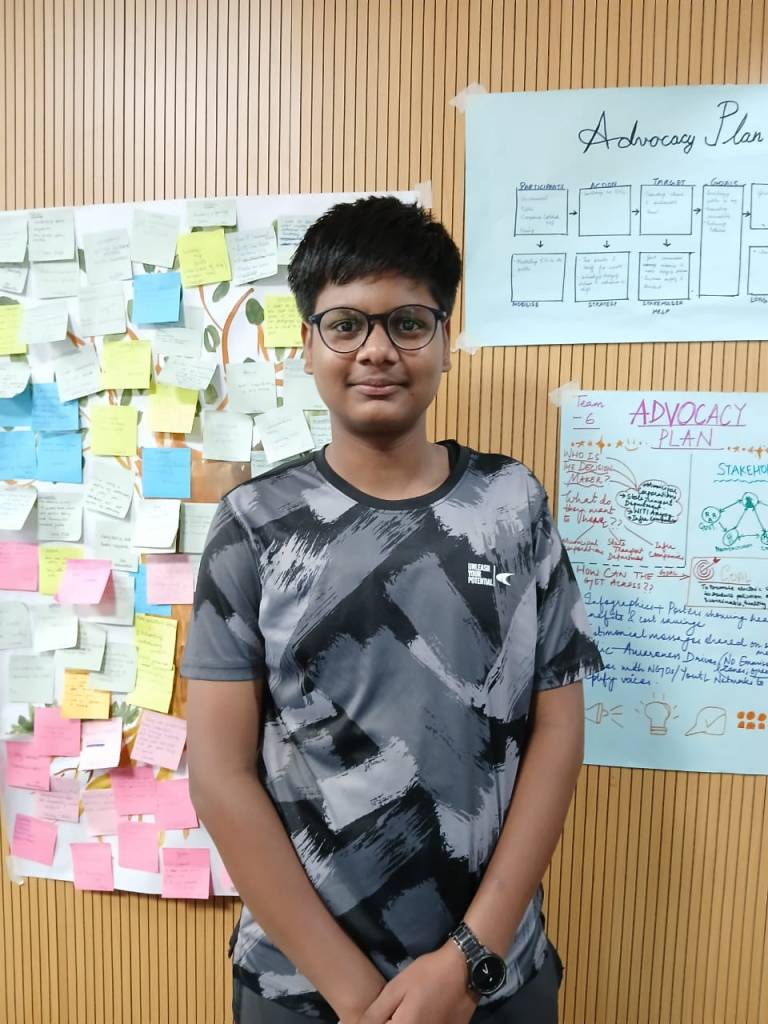
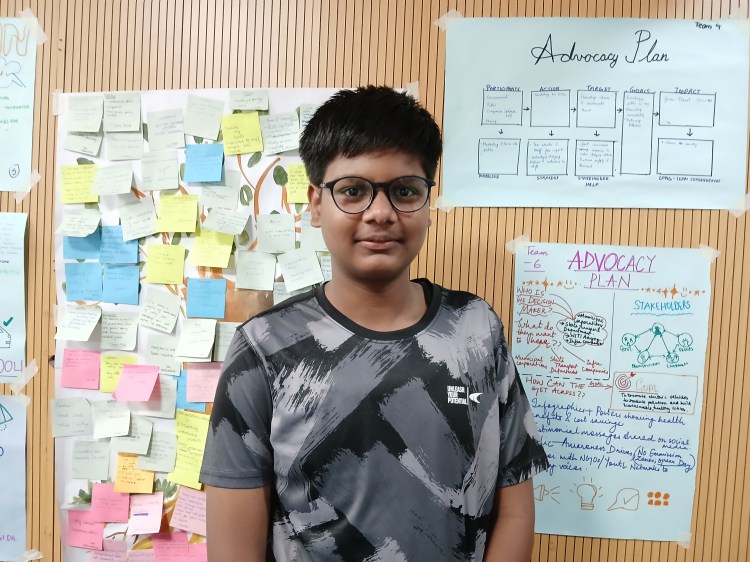
Advocacy Plan
In the end it was 4 pm, we were asked to sit inside the hall where we sat the day before. We had to sit in front to make space for our parents. My parents were a little bit late. A lot of students were performing. Someone played the piano, someone sang the Rabta song on karaoke, someone drew Shohini, someone sang a Russian patriotic song. All the performances were very good.
Drawing of Sohini made by one of the participant.
Before our parents came, some chocolates were given to them who had done something extraordinary. I didn’t get that but I ate one of my friends. In the end, the certificates got distributed and snacks were served. Before the snacks we took a group photo of the whole cohort and with parents. We went there, and my parents had a cup of tea. After taking some photos we left the ISPP Hauz khas.
Conclusion: Reflections and Farewell
A sudden satisfaction ran in my veins that the 7 day program of 7 long hours each day had ended, but I was unhappy because I was leaving a lot of friends that I had made. But I am in the YLAC group. Finally my program ended with a lot of memories I made and an ocean of knowledge I earned.
Originally written in Marathi translated in English
This experience was originally written in Marathi when I was in 5th standard(16 January to 17 January 2021). Now I am in 10th standard in JNV Amravati (Maharashtra). This English translation is a small effort to bring my experience to a wider audience. The translation has been done verbatim, with the help of ChatGPT, edited by me—with care taken to retain the original flow and meaning.
You can find the original Marathi version at the following link
One day suddenly my father asked me if I wanted to go trekking. I said yes. Then my father told me where we had to go. We were not going trekking there, we were going to see a fort called Narnala Fort. This information was told to me by my father. My mother was also going to come with us. We were going on 16th January and were going to return on 17th January. Then we started preparing. The day before leaving, I went with my mother to fix the chain of the bag. After fixing the chain, we took a lot of food items for the journey. Since we were to go in the afternoon, my father scheduled the tuition in the morning. After tuition, I took a bath and got dressed. My mother had bought two new pairs of socks for me to wear there. I got fully ready and sat waiting for the vehicle, but the vehicle got a bit delayed. It was supposed to come at 2 p.m., but for some reason, they were slightly late. Then we boarded the vehicle. On the way, we saw many colleges. After some time, we reached near a farmhouse. Another vehicle also arrived there.
At that place, I got into the second vehicle. The vehicle I got into was very big. That vehicle was brought by Sushil uncle. Sushil uncle and four other people were sitting in that vehicle. I got introduced to them. One was Prajwal dada, others were Radhika tai, Nandini tai and Sai tai. First I sat in the front seat but later had to sit at the back because Radhika tai wanted to play music. After some time, I took out an item from my snack bag — it was Britannia cake pieces. After eating those, I took out another packet. It had a wafer roll and melted chocolate inside it. When I ate that, it felt so good that I can’t describe it. I didn’t eat everything in the vehicle, only these two packets I had eaten. I had nothing to do, so I slept. After waking up, I sat quietly for a while. After some time, we reached a roadside Dhaba. Mom and Dad, who were in another vehicle, also arrived. There I ate one kachori and drank a cup of tea. Then we left from there. While I was looking outside, I saw a board that said “Daryapur border ends.” After a long time, both vehicles stopped at one place. It was evening by then. We stayed there for some time. There were mountains all around. Then we sat in the vehicle. When the vehicle started, we reached the destination within a minute. The people my parents were traveling with were Kumail dada and Muffaddal dada. Kumail dada took out everyone’s luggage from the car’s trunk. After some time, we went inside the premises.
That place was Narnala Wildlife Sanctuary, Shahnoor Complex (Dist. Akola, Maharashtra). I suddenly got scared at the entrance gate because I saw a hyena (lakadbagga) in a cage, but later I found out it was a statue. Muffaddal dada and Prajwal dada went ahead and collected the room key. Room booking had already been done by Sushil uncle. Then we went ahead. When I looked back at a tree, I got very scared because I saw a leopard on the tree. But like before, it was a statue as well.
We were surprised while going ahead because the rooms were far from the entrance gate. On that path, there were stairs, then a bridge, then again some stairs, and a little ahead were the rooms. We were looking for our room. First, we saw a room named ‘Dhanesh’ but it was locked. So we thought it must be our room. To clarify the doubt, we tried our key in that room’s lock and it opened. That room had bunk beds, exactly like in Navodaya schools, which I had seen once in a video. I liked those beds very much. We put everyone’s bags on one bed. I chose my bed to sleep on. I thought there was only one bathroom there, but there were two. One was in a corner and a bed was placed in front of it, so I couldn’t see it. Both bathrooms were nice and clean. Then we went to the canteen. There I ate Happy Happy biscuits. I didn’t know tea would be served there, and when I found out, only one biscuit was left, which I ate with tea. After tea, I had an ice cream.
Then we went for a walk nearby. Everyone was talking about ghosts and their stories, so I threw a leaf at Muffaddal dada, but he didn’t get scared. Suddenly I saw a leopard in a corner but it was also a statue. I sat on that leopard. Then we went to the room to get our dinner boxes and went to the canteen. It was around 8 in the evening. We had dinner in the canteen. After dinner, I distributed halwa to everyone. Then we returned to the room and kept the boxes there. At that time, Sushil uncle and Muffaddal dada went to sleep because they were tired from driving, but the rest of us went outside for a walk. We took photos. The rooms (tents) where we took photos looked like huts, with animal names written on them.
After some time, we sat at a place and were thinking about what game to play. I suggested we could play the “Knock Knock Chocolates” game. When I said this, everyone was confused about what game it was, so I explained it: in this game, the player whose turn it is to catch others – chaser , gives a topic like fruit name, color name, and the others choose what they will become from the given category. Others would have to form a line and the chaser would ask others one by one by knocking them. The chaser would ask them – are you (item name, for eg in category of fruits) mango. If no, the chaser would walk ahead or if yes, the chaser has to chase and catch the guy. The person who got catched up will become the chaser of the next game. If that guy takes the name of another fruit or color the chaser has to chase and catch the guy whose name the previous guy has taken. But nobody liked this game. After thinking for some time, we decided to play the “Tikkar” game. Everybody was so pleased to play Tikkar, so Radhika tai and I set up the game by drawing up the squares on the ground. For the game we had to get a small piece of tile so we made one tile smaller by breaking it in pieces.
In that, my father was the furthest, but in one chance, Prajwal dada went so far ahead that he completed one round. I was feeling quite jealous, so sometimes when he threw the Tikkar, I would throw a marble in between or make the squares smaller by remaking the borders. I was stuck on one square for a long time because either the Tikkar wouldn’t land on it, or I’d fall while picking it up. But finally, I moved two squares ahead.
While Sushil uncle and Muffaddal dada were asleep, Kumail dada also slept. He woke up first, not in the morning but at night, went to the canteen, brought tea in a thermos, and served everyone. It must have been around 10 – 10:30 p.m. Those who were not playing were taught how to play Tikkar. After the Tikkar game ended, we had a match of standing on one leg. The rule of the game was simple, the one who stands on one leg most will win. Even I couldn’t last more than half a minute in that match, but Radhika tai and Prajwal dada stood on one leg for half an hour. We were all having fun watching them. I was amazed at how they could stand on one leg for that long. It was a tough competition. We were waiting to see who would put their foot down first. Finally, Prajwal dada won. By now it was 11 – 11:30 p.m. People from other rooms were also chatting outside.
Then we went to the dormitory. There we laid mattresses in the middle and sat on them. Someone had brought a game called UNO. It is a very renowned card game. I played it, but I didn’t understand it, because I was playing that game for the first time. But still I was playing. I only understood two rules of UNO: one could place the same color card or same number card. Without knowing much, I won the UNO game, and dad came second. I didn’t like that game because the winner has to leave the game. Since it took so long after I won, dad and I played cards. I played two types of card games with mom and dad — one was “Satti Lavani” and I don’t know the name of the other but which was based on luck so generally I used to call it as the game of luck. In the game, equal cards are distributed, and each person has to put a card one by one on the surface. If someone places the same number card as the previous, that person gets all the cards underneath. Dad said that this is the simplest card game he had ever played.
When we returned inside the dormitory, Sushil uncle and Muffaddal dada had woken up and gone outside. While we were playing cards, someone brought a cake because it was Muffaddal dada’s birthday. Just then, he came in and got a surprise, and we ate cake.
After that, everyone went outside, but mom, dad and I stayed in the room. Dad and mom were sleepy, so they stayed, and I stayed for the same. By now it was 12:30 – 1 a.m. Before sleeping on my selected bed, I played a card game with mom. After playing, I ate a “5 Star” chocolate and layed on the bed. Through the window, I saw everyone sitting outside. I asked them if I could come, but they didn’t reply. Still, I went. They were telling ghost stories and watching videos. Soon we came back inside. I exchanged my bed. Everyone was sharing their own stories. Sushil uncle was telling his dangerous experiences at the fort . I tried hard to sleep, but I couldn’t until their stories were over. I was scared, so I slept next to mom.
In the morning at 4:30 a.m., mom woke me up and took me to the bathroom to wash my face. I immediately wore my shoes and packed my bag. After wearing my shoes, I went to the canteen with everyone. Everyone except me had tea there. The guides were saying that we should go on the safari right away, but we thought that animals wouldn’t be visible in the dark. So we decided to leave “with the first rays of the sun.” After some time, we went outside. I sat in the very first jeep.
In that jeep there were Kumail dada, Radhika tai, Prajwal dada, and Muffaddal dada. As we passed the jungle gate and went ahead, I started feeling scared. I felt like a tiger could appear at any moment. It was a bit dark at that time. I had never seen such a vehicle before. That jeep was completely open. There was nothing covering it from above because we were supposed to be able to see everything outside. Only the driver’s seat was lower than ours and was fully enclosed. I wondered why that was the case? I felt a little cold there because the jeep was fully open, so I kept my bag in front of me. On the way, the guide told us that there is a 10-kilometer buffer zone, which means fewer animals would be visible there. As the sun was rising, we stopped the jeep at one place to take a picture of the sunrise. The sun looked beautiful because there were mountains on both sides and the sun in between. I had never seen such a view anywhere, not even in a photo or video. That scene was memorable for me. We went ahead from there and saw an animal. The guide told us its name. That animal was called a bison (wild bull). We knew that as we went forward, we would pass very close to that bison, because it was very near the road in front of us. There we saw people returning from the other side. After some time, when we reached where the bison was, it had moved a bit further away.
From sunrise, I had eaten a packet of chips and a little bit of chiwda (spicy mixture) from one box. At one point, the guide told us that the buffer zone had ended and the core zone had begun. After a long time, we all stopped at a resting spot. Both jeeps stopped there. The guide said we could get down. We got down with our bags. Outside the gate of that rest stop, there was a tree planted in a tire filled with mud. That seemed new to me because I had only seen such things in a bamboo garden which is present in Amravati, nowhere else. After going inside, we sat down. Everyone except me ate poha. I saw a man go near a dog, and the dog tried to fold its hands as if greeting the man. I thought maybe that dog greets everyone, so I went to the dog, but it didn’t greet me at all and didn’t show any reaction either. I went back and forth near the dog many times, but it never reacted.
So I called Prajwal dada and said, “You go to the dog.” And when Prajwal dada went near the dog, I was very surprised because the dog greeted him not once, but three times. I called my father. When he came within three meters of the dog, the dog started barking at him. I thought maybe it was because dad was wearing a black sweater and a black cap, and also dad has a dark complexion. So the dog might have seen him as completely black and barked. But every time Prajwal dada went near the dog, the dog greeted him. I thought maybe it was because of Prajwal dada’s hat, so I wore that hat and went in front of the dog, but it didn’t do anything. Even when dad wore the hat and went, there was no change. Prajwal dada gave the dog Parle-G biscuits. Then Prajwal dada, Radhika tai, and I started jumping from one wooden post to another, which were placed in a circle like chairs. The distance between the two posts was too much for me at first. Initially, I couldn’t jump across, but when I realized I could jump over, I had no more trouble going across.
I took some photos using Sushil uncle’s camera. Just then, our guide told us that we would have to leave soon because “calling” had started. I was puzzled — what is “calling”? Later I found out that “calling” means one animal is warning others that a tiger or leopard has arrived. Some distance away from us, one animal was making a “hawk-hawk” sound. That sound was very sharp. Just then, I heard a tiger’s roar. I told them I heard the sound in that direction, so we drove the vehicle in that direction. We went up to that place. But even where we had stopped, there was nothing. After that, I never heard that sound again. Then we went forward and stopped, thinking that the tiger might have gone ahead to hunt, but there was nothing there either. We kept moving forward and stayed alert. I would sometimes stand up in the jeep and sit down when tired. When the jeep passed through lush green forest, I would sit down because I was scared — most animals live in dense forest, and monkeys live in trees. They might jump onto the jeep or someone’s body. But when the path was dry with dry leaves and where sunlight was falling, I would stand up confidently. After some time, we saw a large group of deer in a field. They looked very small to me because they were far away. I was completely focused on looking outside — even when I stood up or sat down due to tiredness, I kept looking. Only when I bumped into something I would realize I was sitting. Suddenly Kumail dada said, “Stop the jeep”, so the driver stopped and reversed slightly. There was an animal with an orange color and some white round spots on its body. It was a deer. I think it stood there for only two seconds, and in that time, Muffaddal dada couldn’t even take a photo. During those two seconds, the deer had turned its face toward us, but then it ran away. Only photos of it running were captured. The guide told us that the deer was called Chousingha, because it had four horns. I hadn’t paid enough attention to its horns, so I didn’t see them properly.
After some time, I started eating the chocolates from my bag. I had 5 or 6 chocolates in my bag. I wanted them to last for a long time, so I licked all the chocolates instead of chewing them. And I ate one chocolate every 5 minutes. After a while, my chocolates were finished. Kumail dada and Radhika tai were touching the leaves of trees that came near the jeep, so I also started touching the leaves. I kept touching leaves for a long time. Everyone told me to sit down, but I said, “Just let me touch five leaves.” Radhika tai said, “Seems like your chocolates are finished?” I said yes, so she gave chocolates to everyone.
On the way, we stopped the jeep on a watery road. Muffaddal dada took photos there. After some time, we returned to the gate from where we had started. Another jeep also arrived behind us. There, I took some photos using Sushil uncle’s camera.
When we entered through the gate, there was a statue of a woman and a man without heads. There, mom, dad, I and Nandini tai took photos.
Then we went to our room. Everyone slept for a while, and I started searching for the playing cards, but I couldn’t find them. At that time, Muffaddal dada had hidden Radhika tai’s glasses, but he returned them later. We packed our bags, locked the room, and went to the canteen. There we had to wait a long time for lunch because the previous group’s meal took too long. After a long wait, we were finally served lunch. The food was very good. After lunch, I had one ice cream. After some time, we went outside and got into the vehicle.
Then we went to Shahanur Dam. We thought we would find a way to go down from there, so we got down from the vehicle and walked ahead. But we couldn’t find a single way to go down. Suddenly, I found a path to go down on one side, but we wanted to go near the water, and I found a road instead. When we went on that road, we could see the entire dam. It was the first time I saw a dam. That dam was at a great height. I came back quickly because I was afraid I might fall.
Then we got into the vehicle and headed back home. I slept a lot in between, so I don’t know what happened during the ride. When I woke up, we had stopped to drink sugarcane juice. After drinking the juice, I changed the vehicle. After that, I slept again in the vehicle. When I woke up, I found out we were very close to home, and just in a few minutes we reached home.
I really liked this trip because I had never seen a forest and a dam in real life before. (16 January to 17 January 2021)
Author – Laxman Gaikwad Book Introduction / Review -translated in English Reviewer in Marathi: Aarav Raut, Class 10th, Jawahar Navodaya Vidyalaya, Amravati (Maharashtra)
This introduction/review of the book Uchalya was originally written in Marathi by me. You can find the original Marathi version at the following link.
The book itself is also originally written in Marathi. This English translation of the book introduction/review is a small effort to bring the story and its powerful message to a wider audience. The translation has been done verbatim, with care to retain the original flow and meaning.
Aarav raut
I read the book Uchalya in January 2025 before reading Juthan. I had already read some Marathi Dalit autobiographies in October 2024, like Bhura, Kolhatyacha Por, Baluta, but I hadn’t read Uchalya during that time. When I was in Jawahar Navodaya Vidyalaya, Jhajjar, (Haryana) my Marathi teacher Vishal Sir suggested this book to me
The author of Uchalya, Laxman Gaikwad, is a writer who came out of a very difficult situation. In this book, he has written about his life from childhood to standing in the Lok Sabha elections. He starts the book by introducing his caste. He belonged to the Pathrut caste, which was called a thief caste. Stealing was part of their daily life. He had four brothers and two sisters. His fourth brother used to have seizures and troubled him a lot. The author was the youngest brother. His father wanted to educate him and make him a great person.
His brother Manik Dada was part of a gang of thieves, and they were trained in stealing. Once, when his brother was caught stealing, he was badly beaten, and out of fear of further beatings, he gave away the names of his friends. This made his friends very angry, and they too beat him badly, worse than an animal. Slowly, he got used to stealing and started bringing money home. He taught his second and third brothers how to steal. Their language is very different from simple Marathi. Some of the words in their language are as follows:
There are many more things I found very different. They have used many Telugu words in their language.
Their house was near the village defecation area. Women from the village would come to defecate in front of their house. That was beneficial to them too, as pigs (gunne) would come to eat the waste, and they would catch those pigs, cook them, and eat them. There was a lot of food scarcity in their house, but his father never let his education stop. He studied 4th and 5th in the village school and then went out. He was sent to a hostel, but he couldn’t adjust there. He left the hostel in 9th grade. After a few days, he started working. His life started to come on track. One day, he received a lower Diwali bonus, so he raised his voice. He led that protest. Because of this act, he was given an opportunity by his senior officer to go on stage and give a speech on 15th August. Gaikwad used this opportunity fully and told all the truth — the beatings, oppression, and money fraud happening.
The workers were happy because someone had finally spoken on their behalf. The workers elected Gaikwad to the Board of Directors, and he worked hard for the benefit of workers. All the workers started seeing him as a leader. The owners then began to hate Gaikwad. Because of this, he was fired from his job. After losing his job, he faced many problems to earn a living. He tried selling vegetables, running a tea stall, and a hotel. One day, he felt he should do something for his caste. So, he tried to open a school but failed. Still, he would always be present in any social reform activities. Because of this, he became very well known. He was known across Maharashtra. Then one day, he got a chance to stand in Lok Sabha elections, and he worked very hard for it but lost due to a lack of money.
Unsettling Encounters
Some incidents in this book I found extremely disgusting. The first incident — Laxman and his fourth brother used to sleep together due to lack of space in the house. They would sleep next to goats and sheep. They had only one or two blankets, so both of them would sleep under one blanket. Sometimes, the goats would urinate on the blanket, and it would feel warm to them — and the most surprising thing is, they liked it. He said he wished the goats kept urinating and kept them warm. They never washed the blanket. They would just dry it in the sun in the morning and use it again at night.
The second incident I found even more disgusting — there used to be a caste panchayat for their community. The main people were called Talange. Once, an incident occurred — a man used his own daughter like a wife, and the whole village found out. Both of them were called, and a caste panchayat was held. All the Talange gave their opinions, and they reached a conclusion. Reading that conclusion gave me goosebumps. The punishment was — the man had to dip his mustache in his daughter’s urine and be boycotted for two years.
In another caste panchayat dispute, a man had to dip his nose in a woman’s urine. Such things were unbelievable and beyond my thoughts.
This book tells the pain, suffering, and misery of the nomadic tribes. A boy like me never got to read such autobiographies. If I hadn’t read this one, I would never have known the lives of such people. I wouldn’t have known that such things ever happened in this world.
Uchalya is a 216-page book. The publisher is Saket Prakashan, and the price of the book is 110 rupees.
The New Delhi World Book Fair 2024 became a special moment for author Aarav Raut as he launched his first book, “Raja Sudir ki Sahas Katha”, published by IndiePress. The event also featured a short interview video with the author, where he talked about the story, his inspiration, and his journey of writing the book.
A Tale of Courage and Imagination
When asked to introduce the book, Aarav Raut shared that “Raja Sudhir ki Sahas Katha” is a gripping tale of bravery, values, and leadership. Set in a fictional land, the story revolves around Raja Sudir, a wise and courageous king who overcomes challenges through intelligence, resilience, and a strong sense of justice. The book aims to inspire young readers and adults alike with its powerful narrative and timeless message.
A Dream Realized
Launching a book at the World Book Fair is no small feat. Raut expressed immense pride and joy as he saw his words come to life in print. “It’s surreal to see the manuscript become a real book, and even more special to unveil it in such a prestigious setting,” he shared. The moment was an emotional milestone that marked the transition from writer to published author.
Questions asked for Book Launch at World Book Fair Delhi 2024
1.Congratulations on the launch of your book Raja Sudhir ki Sahas Katha in the world Book Fair 2024 Delhi! Could you please give us a brief Introduction to the book?
2.Launching a book, especially at such a stage, is always a memorable moment for an author. How did it feel to see your writing taking a tangible form, and what emotions are you experiencing today?
3.Is there a specific event that inspired this story or was this an out of the blue idea?
4.What got you writing in the first place?
5.What was your impression of your first draft when you read it?
6. Which part of your story connects the most with you? Why?
7. Who is your all time favourite author? Which book of his/ hers made you fall in love with them?
8.What is your evergreen tip to the writers out there?
9. What was your hardest scene to write?
10. Do you have another plot brewing?
Screening of author interview at the world book fair New Delhi 2024 Book Raja Sudir ki Sahas Katha
If you’re interested in reading this inspiring tale of courage and leadership, you can buy the book on Amazon here:
पुस्तक चर्चा: आरव राउत की लिखी कहानी ‘राजा सुदीर की साहस कथा’