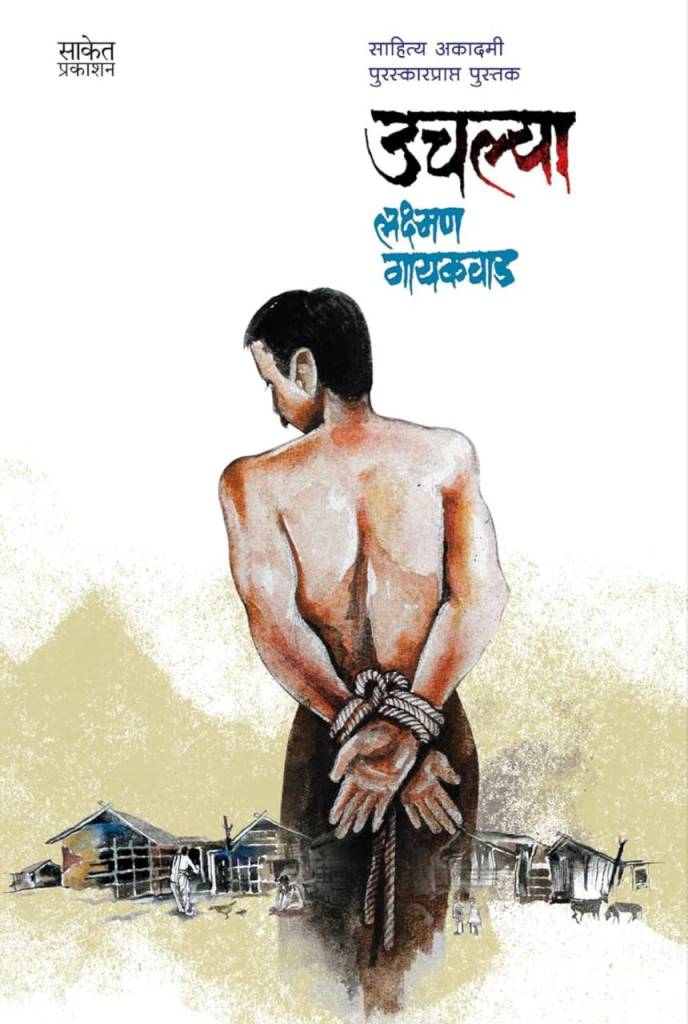
Author – Laxman Gaikwad
Book Introduction / Review -translated in English
Reviewer in Marathi: Aarav Raut, Class 10th, Jawahar Navodaya Vidyalaya, Amravati (Maharashtra)
This introduction/review of the book Uchalya was originally written in Marathi by me. You can find the original Marathi version at the following link.
The book itself is also originally written in Marathi. This English translation of the book introduction/review is a small effort to bring the story and its powerful message to a wider audience. The translation has been done verbatim, with care to retain the original flow and meaning.
Aarav raut
I read the book Uchalya in January 2025 before reading Juthan. I had already read some Marathi Dalit autobiographies in October 2024, like Bhura, Kolhatyacha Por, Baluta, but I hadn’t read Uchalya during that time. When I was in Jawahar Navodaya Vidyalaya, Jhajjar, (Haryana) my Marathi teacher Vishal Sir suggested this book to me
The author of Uchalya, Laxman Gaikwad, is a writer who came out of a very difficult situation. In this book, he has written about his life from childhood to standing in the Lok Sabha elections. He starts the book by introducing his caste. He belonged to the Pathrut caste, which was called a thief caste. Stealing was part of their daily life. He had four brothers and two sisters. His fourth brother used to have seizures and troubled him a lot. The author was the youngest brother. His father wanted to educate him and make him a great person.
His brother Manik Dada was part of a gang of thieves, and they were trained in stealing. Once, when his brother was caught stealing, he was badly beaten, and out of fear of further beatings, he gave away the names of his friends. This made his friends very angry, and they too beat him badly, worse than an animal. Slowly, he got used to stealing and started bringing money home. He taught his second and third brothers how to steal. Their language is very different from simple Marathi. Some of the words in their language are as follows:
Khistang matne – pickpocketing
Muchchu karne – stealing
Tirgaya jaane – going to steal
Gunna – pig
Phandi – female pig
There are many more things I found very different. They have used many Telugu words in their language.
Their house was near the village defecation area. Women from the village would come to defecate in front of their house. That was beneficial to them too, as pigs (gunne) would come to eat the waste, and they would catch those pigs, cook them, and eat them. There was a lot of food scarcity in their house, but his father never let his education stop. He studied 4th and 5th in the village school and then went out. He was sent to a hostel, but he couldn’t adjust there. He left the hostel in 9th grade. After a few days, he started working. His life started to come on track. One day, he received a lower Diwali bonus, so he raised his voice. He led that protest. Because of this act, he was given an opportunity by his senior officer to go on stage and give a speech on 15th August. Gaikwad used this opportunity fully and told all the truth — the beatings, oppression, and money fraud happening.
The workers were happy because someone had finally spoken on their behalf. The workers elected Gaikwad to the Board of Directors, and he worked hard for the benefit of workers. All the workers started seeing him as a leader. The owners then began to hate Gaikwad. Because of this, he was fired from his job. After losing his job, he faced many problems to earn a living. He tried selling vegetables, running a tea stall, and a hotel. One day, he felt he should do something for his caste. So, he tried to open a school but failed. Still, he would always be present in any social reform activities. Because of this, he became very well known. He was known across Maharashtra. Then one day, he got a chance to stand in Lok Sabha elections, and he worked very hard for it but lost due to a lack of money.
Unsettling Encounters
Some incidents in this book I found extremely disgusting. The first incident — Laxman and his fourth brother used to sleep together due to lack of space in the house. They would sleep next to goats and sheep. They had only one or two blankets, so both of them would sleep under one blanket. Sometimes, the goats would urinate on the blanket, and it would feel warm to them — and the most surprising thing is, they liked it. He said he wished the goats kept urinating and kept them warm. They never washed the blanket. They would just dry it in the sun in the morning and use it again at night.
The second incident I found even more disgusting — there used to be a caste panchayat for their community. The main people were called Talange. Once, an incident occurred — a man used his own daughter like a wife, and the whole village found out. Both of them were called, and a caste panchayat was held. All the Talange gave their opinions, and they reached a conclusion. Reading that conclusion gave me goosebumps. The punishment was — the man had to dip his mustache in his daughter’s urine and be boycotted for two years.
In another caste panchayat dispute, a man had to dip his nose in a woman’s urine. Such things were unbelievable and beyond my thoughts.
This book tells the pain, suffering, and misery of the nomadic tribes. A boy like me never got to read such autobiographies. If I hadn’t read this one, I would never have known the lives of such people. I wouldn’t have known that such things ever happened in this world.
Uchalya is a 216-page book. The publisher is Saket Prakashan, and the price of the book is 110 rupees.
 आरव की डायरी